
Hiring guide
How long does air duct cleaning take?
Short answer: it depends on your home and on what is in the job, so the honest number comes from the company that will do it. The EPA says to ask each provider for an estimate of the hours or days, and NADCA says a contractor should give one on the first call.
Why won't a single number answer this?
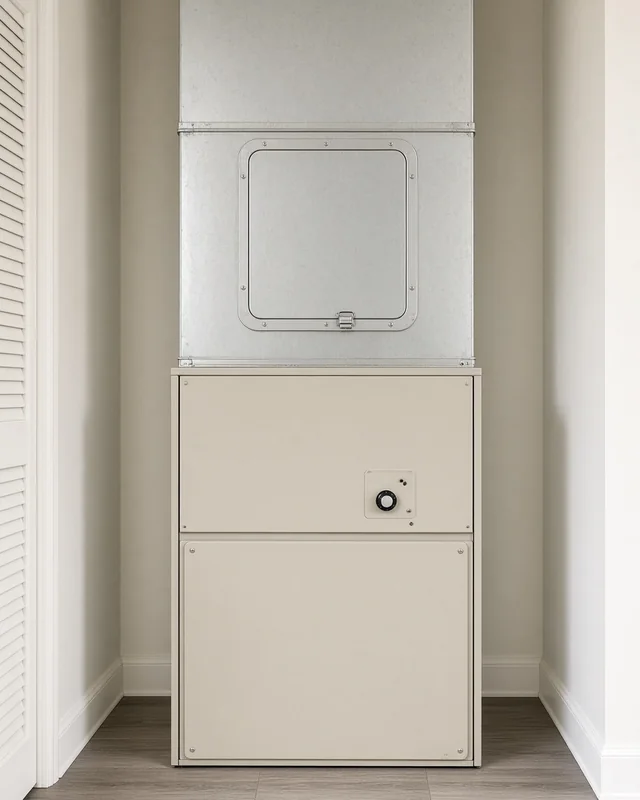
Because two homes with the same square footage can be very different jobs. One has a single furnace in a garage closet and short runs to every room. Another has two systems, an air handler in a hot attic and ducts under a crawlspace. A time quoted without knowing your home is a guess, and we do not publish hour figures for that reason.
What we can do is show you what the time depends on, so you can judge whether the estimate you are given matches the scope you are being sold.
When should you ask how long it will take?
On the first call. NADCA's consumer page on cost and time estimates says the contractor should give a general time estimate in that first phone call, and the EPA's page Should You Have the Air Ducts in Your Home Cleaned? lists asking for an estimate of the hours or days among the steps of choosing a provider. Ask every company you call the same question, after giving each the same facts about your home. If one estimate is far shorter than the others, ask what that company leaves out.
Then get it in writing. The EPA advises a written agreement with the total cost and the scope before work begins. The time estimate belongs next to the scope, because the two explain each other.
What makes a visit take longer or shorter?
A visit's length comes down to the size and access of the job: how many systems the home has, which components are in the scope, how easy the equipment is to reach, whether access openings are cut, the kind of duct, and how many registers and how much debris there are. Each is explained below.
How many systems the home has
Each heating and cooling system has its own air handler and its own set of ducts. A house with an upstairs system and a downstairs system is close to two jobs. The EPA even states its cost figure per system, which tells you how the work is counted.
Which components are in the scope
The EPA's list for a full cleaning runs past the ducts: supply and return ducts and registers, grilles and diffusers, heat exchangers, heating and cooling coils, condensate drain pans, the fan motor and fan housing, and the air handling unit housing. A job that covers all of it takes longer than one that vacuums the supply runs. Whether the coils are cleaned matters most here, since they sit inside the unit and need care to reach. Our page on what a duct cleaning visit includes walks through each part.
How easy the equipment is to reach
An air handler in a garage is quick to get to; one in a tight attic or a crawlspace is not. The crew may need to move between the unit, the attic or crawlspace and every room more than once.
Access openings
The EPA says the provider should open access ports or doors so the entire system can be cleaned and inspected. Cutting and then sealing extra openings in a long trunk line adds time, and it is a sign the job is being done properly rather than through the registers alone. In Texas, cutting into ducts or plenums takes the work outside the no-license duct cleaning allowance in TDLR's rule 16 TAC 75.100(c), so ask who will do it and check them on the TDLR license search. In California, check the license of anyone who repairs, replaces or modifies ductwork or equipment on the CSLB's Check A License page.
The kind of duct
Sheet metal can take firmer brushing. The EPA says to use only soft-bristled brushes on fiberglass duct board, and to use well-controlled brushing with contact vacuuming. Gentler work on duct board or lined ducts is slower work.
How many registers and how much debris
Every supply register and return grille is removed, cleaned and put back. More rooms means more of them. Heavy construction dust after a remodel, or debris left by pests, also takes longer to remove than light dust.
Why is a very short visit for a whole house a warning sign?
If the scope above is done, it cannot be rushed. When a company promises a whole house in a very short visit, it usually means a hose through a few registers and nothing more. NADCA's consumer site warns about "blow-and-go" companies that advertise low prices but deliver minimal cleaning, and the short visit is often the first half of that pattern.
The second half is the upsell at the door.
How should you prepare the home?
Before the visit, clear a path to every register, return grille and the furnace or air handler, including the attic hatch or crawlspace door, leave room outside for the vacuum equipment, plan for pets, and have your written scope at hand. A crew that can reach everything works through the job without stops.
The checklist:
- Clear a path to every register and return grille, including ones behind beds, sofas and dressers.
- Clear the space around the furnace or air handler, and the attic hatch or crawlspace door if the unit or ducts are there.
- Leave room outside. The EPA describes vacuum equipment that exhausts outside the home; if the company uses a truck-mounted unit, it will need to park close to a door and run a hose inside. Ask on the phone where it will go.
- Plan for pets, since doors may be open and equipment running.
- Have your written scope at hand, so you can check off the components as they are done.
- Ask whether the system needs to be off, and for how long, so you can plan around hot or cold weather.
What is it like to be home during the visit?
Expect movement and noise. Grilles come off in each room, a hose or brush goes into the ducts, and the crew works at the unit itself if the air handler and coils are in scope. If access ports are opened, you may see the openings being made and sealed.
It is reasonable to ask the crew to show you parts of the system before and after. A company that follows NADCA's standard, ACR, the NADCA Standard, should be able to explain what it is doing at each step. If anyone tells you mid-visit that new work is urgent, ask for proof and a written price, and take time to decide; the Better Business Bureau's tip on duct cleaning advises asking for proof of mold or other contamination.
What should you ask on the phone about timing?
Ask each company how long your home will take given its systems, registers and where the unit is, whether that estimate covers the coils, drain pan, blower and air handler housing, whether access ports change the time, what could make the day run longer, and whether one visit will finish the job.
- How long do you expect my home to take, given the number of systems, registers and where the unit is?
- Does that estimate include the coils, drain pan, blower and air handler housing?
- Will you open access ports, and does that change the time?
- What would make the visit run longer on the day, and would that change the price?
- Will one crew finish in one visit, or is a second visit planned?
Our page on the air duct cleaning quote shows what the written estimate should list.
Sources: U.S. Environmental Protection Agency, Should You Have the Air Ducts in Your Home Cleaned? (read 2026-10-29); NADCA consumer site, Cost and time estimates, and Avoid scams (read 2026-10-29); NADCA, ACR, the NADCA Standard, 2021 Edition (read 2026-10-29); Better Business Bureau, Tip: Cleaning Your Air Ducts (read 2026-10-29); Texas Department of Licensing and Regulation rules, 16 TAC 75.100 (read 2026-10-29); Contractors State License Board, Check A License (read 2026-10-29).
To talk your own home through, Call (877) 819-0760 or send a request.
Questions about how long duct cleaning takes
Why don't you list a number of hours for duct cleaning?
Because the time depends on your home: the number of systems, which components are in the scope, where the air handler sits and what the ducts are made of. The EPA says to ask each provider for its own estimate of the hours or days, so that is the number to rely on.
What if the visit runs much longer than the estimate?
Ask the crew why before they go on: what they found and whether the scope has changed. If the work or the price changes, ask for it in writing, as the EPA advises a written agreement with the total cost and scope, and agree to it before the extra work starts.
Does a second heating and cooling system add time?
Yes. Each system has its own air handler and ducts, so a home with two systems is close to two jobs. The EPA counts its cost range per system for the same reason. Tell each company how many systems you have when you ask for an estimate.